

Building a successful career after graduation is one of the most important decisions of your life. The job market in 2026 is competitive yet full of opportunities for graduates who are prepared, adaptable, and willing to continuously learn and grow. Success in today’s workplace demands more than just academic qualifications-it requires a combination of technical skills, power skills like emotional intelligence and critical thinking, and the ability to adapt to rapid changes. Whether you graduated from engineering, business, or any other field, the strategies and principles for career success remain universal. This comprehensive guide will walk you through the essential steps to build a rewarding and successful career that aligns with your goals and aspirations.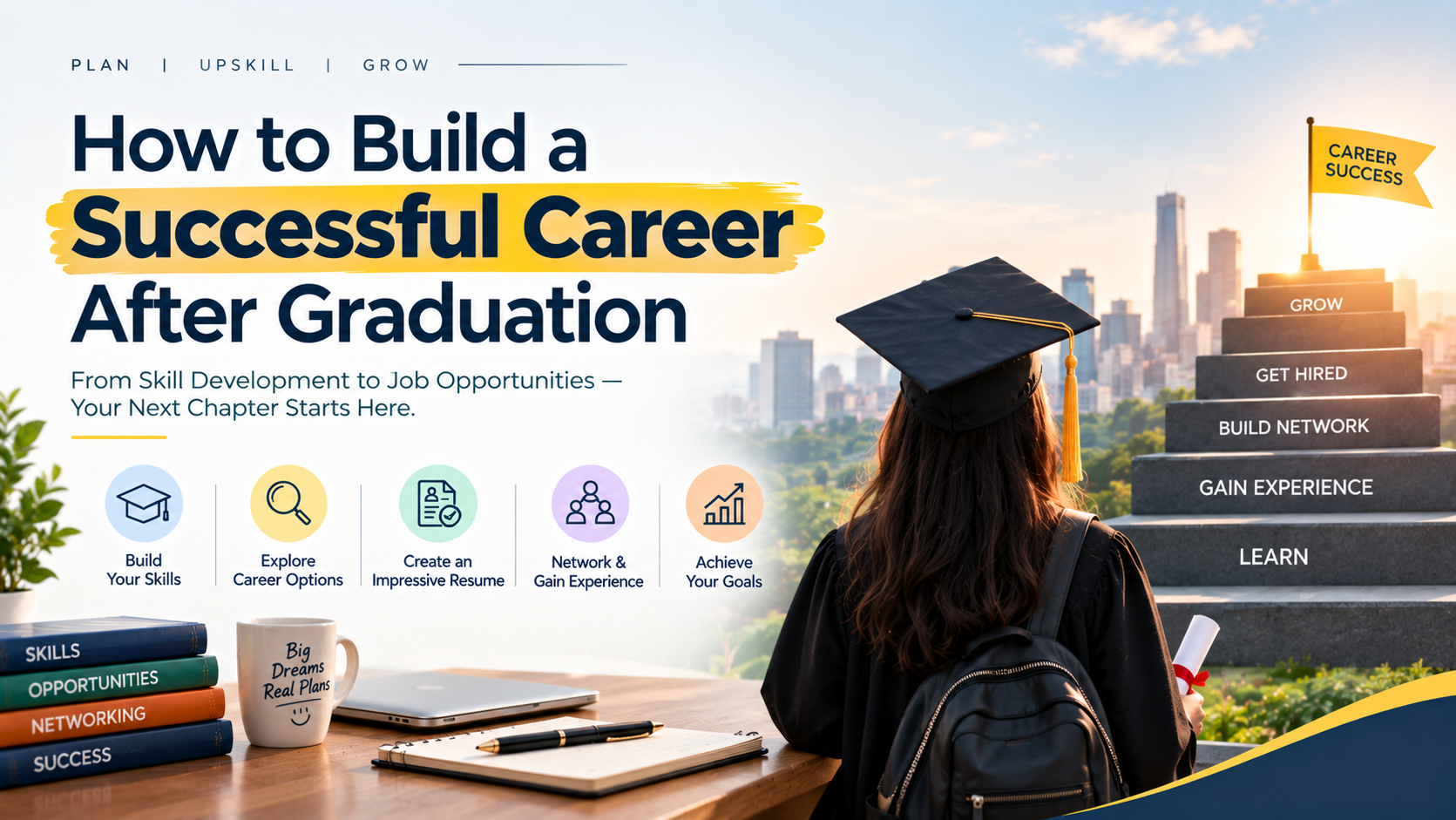
Recent Developments in the 2026 Job Market:
- Skill-Based Hiring Dominance: Employers now prioritize practical skills and experience over traditional degrees and credentials.
- AI Proficiency as Baseline: AI and automation knowledge is becoming essential across all industries and job roles.
- Power Skills Over Soft Skills: Emotional intelligence, critical thinking, collaboration, and adaptability are highly valued by employers.
- Remote-First Work Culture: Many organizations offer flexible and remote working arrangements for fresh graduates.
Highlights of Successful Career Building in 2026:
Building a successful career requires understanding key metrics and trends. Below is a glance at some essential details.
| Parameter | Details |
| Average Starting Salary (2026) | INR 4.5-7.5 LPA (Non-Tech), INR 6-12 LPA (Tech) |
| Most In-Demand Skills | AI/ML, Cloud Computing, Data Science, Cybersecurity, Digital Marketing |
| Average Time to First Job | 3-6 months (with active job search) |
| Career Growth Timeline | 10-year earning potential: 3-5x entry salary |
| Industry with Highest Demand | Technology, Finance, Healthcare, E-commerce, Consulting |
| Expected Job Market Growth | 5-8% annually for skilled professionals |
| Importance of Certifications | 90% of employers value industry certifications and continuous learning |
Step 1: Strategic Career Planning
The foundation of a successful career starts with clear planning. Before you begin your job search, take time to understand yourself and the market.
- Self-Assessment: Evaluate your strengths, weaknesses, interests, and values. What subjects excite you? What kind of work environment do you prefer? Understanding these will help you choose a career path that genuinely interests you.
- Research Industries & Roles: Explore various industries and job roles that align with your qualification. Use platforms like LinkedIn, Glassdoor, and industry reports to understand salary ranges, growth prospects, and required skills.
- Set Clear Goals: Define short-term goals (first year), medium-term goals (2-5 years), and long-term goals (10+ years). Having a roadmap will keep you focused and motivated.
Step 2: Develop In-Demand Skills
In 2026, employers value a combination of technical skills and power skills. Invest time in developing both to make yourself highly marketable.
| Skill Category | Key Skills to Develop | Learning Timeline |
| Technical Skills | Programming (Python, Java), AI/ML, Data Analytics, Cloud Computing, Cybersecurity | 3-6 months each |
| Power Skills | Communication, Critical Thinking, Problem-Solving, Emotional Intelligence, Adaptability | Continuous development |
| Industry-Specific Skills | Digital Marketing, Financial Analysis, Product Management, UX Design | 2-4 months each |
| Certifications | Google, AWS, Microsoft, CPA, PMP, Scrum Master | 2-6 months each |
Step 3: Effective Job Search Strategy
A strategic job search can reduce your time to first employment and help you land better opportunities.
- Build a Strong Online Presence: Create a professional LinkedIn profile with a clear headline, detailed summary, and portfolio of projects. Showcase your work, achievements, and recommendations from mentors or professors.
- Customize Your Resume and Cover Letter: Tailor your resume for each job application. Highlight relevant skills and achievements that match the job description. Use keywords that companies are looking for.
- Use Multiple Job Search Channels: Apply through job portals (LinkedIn, Indeed, Naukri), company career pages, networking events, and recruitment drives. Don’t rely on a single source.
- Network Actively: Attend industry conferences, webinars, and meetups. Connect with professionals in your field. Many jobs are filled through referrals and networking, not just applications.
Step 4: Master Interview Preparation
Interviews are your chance to showcase your skills and personality. Thorough preparation can significantly increase your chances of success.
- Company Research: Thoroughly research the company, its culture, recent news, and the specific role. Understand how you can add value to the organization.
- Practice Common Questions: Prepare answers for standard questions like ‘Tell me about yourself’, ‘Why do you want this job’, and ‘What are your strengths and weaknesses’.
- Use the STAR Method: For behavioral questions, use the STAR (Situation, Task, Action, Result) method to provide structured, compelling answers with real examples.
- Prepare Your Own Questions: Ask thoughtful questions about the role, team, company culture, and career growth opportunities. This shows genuine interest.
Most In-Demand Career Fields in 2026
Understanding which fields offer the best opportunities helps you make informed career choices. Here are the hottest career fields in 2026:
| Career Field | Growth Rate | Avg Entry Salary | 10-Yr Potential |
| AI/Machine Learning | 15-18%/year | INR 8-12 L | INR 40-50 L |
| Data Science | 12-15%/year | INR 7-11 L | INR 35-45 L |
| Cybersecurity | 14-17%/year | INR 6-10 L | INR 30-40 L |
| Cloud Computing | 13-16%/year | INR 6-9.50 L | INR 28-38 L |
| Digital Marketing | 10-12%/year | INR 4-6 L | INR 15-25 L |
| Product Management | 11-13%/year | INR 5-8 L | INR 20-30 L |
| Software Development | 9-11%/year | INR 6-10 L | INR 25-35 L |
| Finance/Banking | 8-10%/year | INR 5-8 L | INR 20-35 L |
Step 5: Strategies for Your First Job
Your first job is crucial for setting the trajectory of your career. Here’s how to make the most of it:
- Focus on Learning: Your first job should prioritize learning and skill development over maximum salary. Gain practical experience and industry knowledge.
- Find a Mentor: Identify a senior colleague or manager who can guide your career. A good mentor can accelerate your growth significantly.
- Build Your Network: Connect with colleagues, attend company events, and expand your professional network. These relationships will help throughout your career.
- Seek Feedback and Improve: Ask for regular feedback from your manager. Be open to criticism and continuously work on improving your skills.
Career Growth Timeline: What to Expect
Understanding typical career progression helps you set realistic goals and track your growth:
| Career Stage | Timeline | Key Milestones & Focus |
| Entry-Level | 0-2 years | Learning fundamentals, building skills, establishing professional relationships |
| Junior Professional | 2-4 years | Taking on more responsibilities, becoming specialist in area, first promotion |
| Mid-Level Professional | 4-8 years | Leading projects, mentoring juniors, developing expertise, considering specialization |
| Senior Professional | 8+ years | Strategic leadership, organization influence, high compensation, considering lateral moves |
Conclusion
Building a successful career after graduation requires strategic planning, continuous skill development, and a proactive approach to your professional growth. In 2026, the job market rewards those who are adaptable, willing to learn, and possess a combination of technical and power skills. Your first job is just the beginning of a long journey—focus on building a strong foundation, developing meaningful relationships, and continuously upgrading your skills. Remember that career success is not just about salary; it’s about finding work that is fulfilling, aligns with your values, and offers opportunities for growth. The Class of 2026 faces a competitive but promising job market. By implementing the strategies outlined in this guide, staying current with industry trends, and maintaining resilience through challenges, you can build a rewarding career that leads to long-term success and satisfaction.
FAQs
1.How long does it typically take to find a job after graduation?
On average, it takes 3-6 months to find a job after graduation with active job searching. Those with specialized skills or strong networks may secure jobs faster.
2.What is the most important skill to develop for career success in 2026?
Adaptability is the most valuable skill. Being able to learn quickly, embrace new technologies, and work effectively with diverse teams is crucial for success.
3.Should I focus on a higher salary or learning at my first job?
For your first job, prioritize learning and skill development over maximum salary. The knowledge and experience you gain will lead to better opportunities and higher salaries in the future.
4.How important is networking for career success?
Networking is extremely important. Studies show that 40-50% of jobs are filled through referrals and networking, not just applications.
5.Should I pursue higher education after graduation?
It depends on your career goals. For technical roles, industry certifications may be more valuable than a master’s degree. MBA can be beneficial for management roles after gaining 2-3 years of experience.
6.can I stand out in a competitive job market?
Stand out by building a strong online presence, completing relevant certifications, contributing to open-source projects, and developing a unique skill combination.
7.What are ‘power skills’ and why are they important?
Power skills include emotional intelligence, critical thinking, communication, and adaptability. They are important because they cannot be automated and are increasingly valued by employers in the AI age.
8.How often should I change jobs for career growth?
Typically, stay 2-3 years at each job before considering a move. This gives you time to learn, contribute, and build credibility. Frequent job changes can negatively impact your career progression.
9.How can I negotiate my salary as a new graduate?
Research industry standards for your role and location, highlight your unique value proposition, and practice negotiation. Be confident but realistic in your expectations.
10.What should I do if I’m not satisfied with my first job?
Give yourself at least 1 year to learn and adapt. If you’re still unsatisfied after that, start looking for better opportunities. Don’t quit without securing another job first.
References
Career mantra website: Find India’s Top Colleges/Universities suitable for you | Get Admission in Top Universities in Abroad | Common Application Formhttps://www.careermantra.net/
You can also read these:
Top Colleges in Delhi Archives – Career Mantra https://share.google/mQ0ghJ8iGLjrIBCTJ
Engineering Colleges in Delhi Archives – Career Mantra https://share.google/BNqQLR6GdzhuMGIPZ
Top B.Tech Colleges in Delhi NCR Archives – Career Mantra https://share.google/8zXA5ZwymqKA9zcLo
Leave a comment