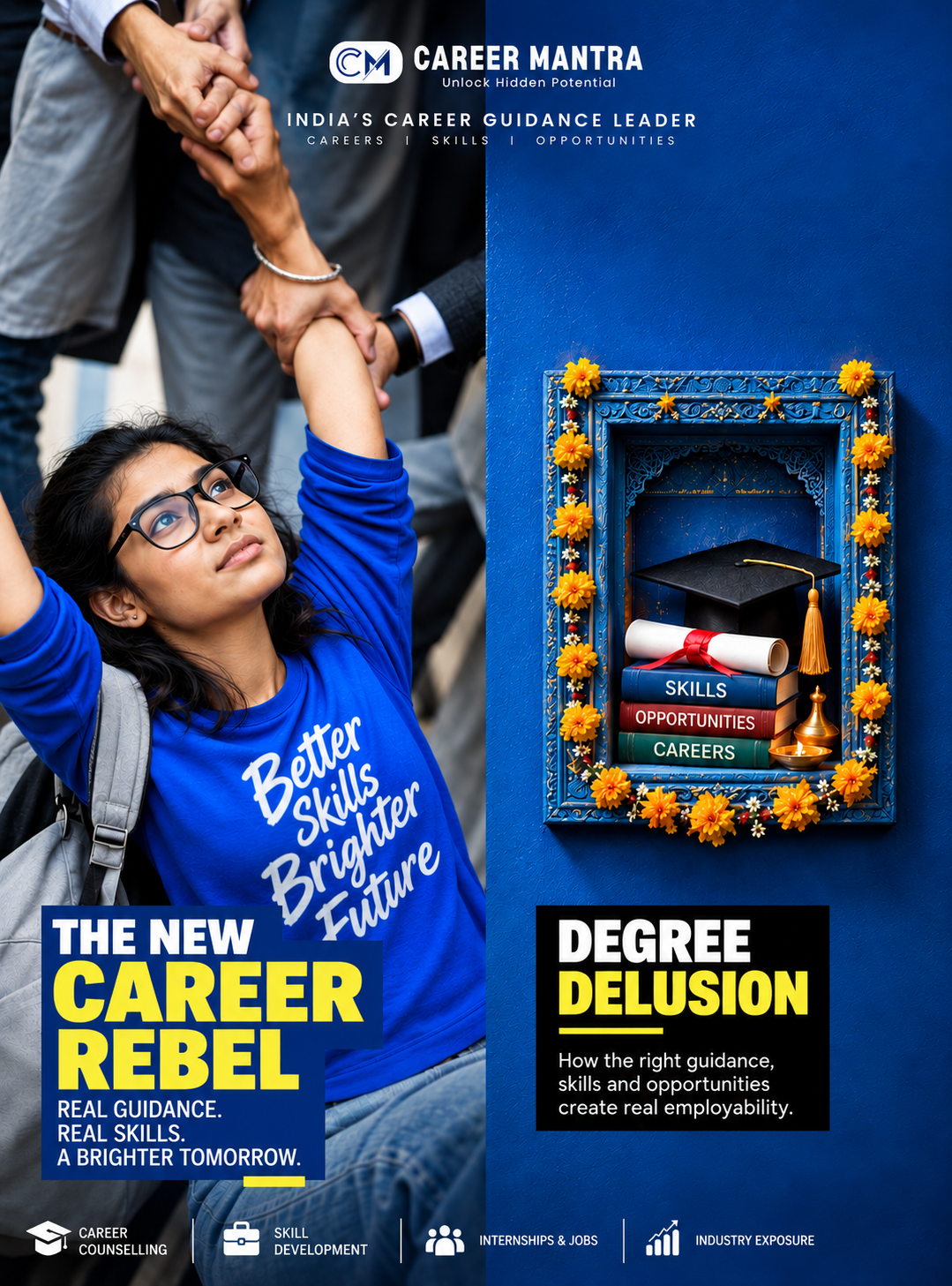
 For many students, choosing a college course is one of the most important decisions of their lives. Yet, this decision is often influenced by family expectations, social pressure, popular career trends and the perceived reputation of an institution rather than a clear understanding of career opportunities.
Students may enrol in a programme without knowing what jobs it can lead to, what skills employers expect or whether the course matches their interests. After graduation, some discover that their chosen qualification does not align with the career they want to pursue.
Career guidance should therefore begin before admission, not after graduation. Schools and colleges need to help students understand different professions, explore their strengths and evaluate career pathways before committing time and money to a degree.
The First-Job Struggle: When Talent Goes Unnoticed
Academic marks are often among the first things employers examine, but they do not always reveal a candidate's complete potential. A student with average grades may possess strong problem-solving abilities, creativity or practical skills that are difficult to measure through examinations alone.
At the same time, students who perform well academically may struggle with interviews, workplace communication or practical assignments because they have had limited opportunities to develop these abilities.
Recruitment processes should give candidates opportunities to demonstrate what they can actually do. Practical assessments, project portfolios, internships and structured interviews can help employers identify talent beyond academic scores.
For graduates, building a portfolio of meaningful work can also provide evidence of their capabilities, particularly when they have little formal experience.
The Digital Divide in Career Preparation
Access to career opportunities is not equal for every student. Some have access to professional networks, modern computer laboratories, experienced mentors and internships through their institutions or families. Others must search for learning resources and employment opportunities independently.
The difference can influence how confidently students navigate recruitment, learn digital tools and connect with employers.
Affordable training, accessible career counselling, reliable internet access and stronger placement support can help reduce these barriers. Colleges should also ensure that students from smaller towns and less-connected backgrounds receive opportunities to develop professional skills.
Employability should depend on a student's capabilities and willingness to learn, not simply on the resources available to them before entering college.
Are Students Learning to Think or Just to Pass Examinations?
An education system that places excessive emphasis on memorisation can leave students underprepared for situations that require independent judgement. In professional environments, employees are frequently expected to interpret information, identify problems, evaluate alternatives and explain their decisions.
These abilities develop through practice. Classroom discussions, research assignments, business simulations, group projects and open-ended questions can encourage students to move beyond memorising information.
Assessment methods should reward understanding and application, not just the ability to reproduce textbook answers. The objective is to prepare students to handle unfamiliar problems rather than only those for which they have already studied a solution.
From Job Seekers to Problem Solvers
Employment is not the only possible outcome of higher education. Entrepreneurship, freelancing, independent consulting and small-business development can provide alternative career pathways for graduates with relevant skills and support.
However, starting a business requires more than an idea. Young entrepreneurs may need financial literacy, customer research, communication skills, digital marketing knowledge and an understanding of business operations.
Colleges can introduce entrepreneurship projects, mentorship programmes and practical business challenges to help students explore these possibilities. Such initiatives should complement, rather than replace, access to conventional employment opportunities.
The aim should be to help graduates recognise different ways of creating economic value while making informed decisions about their futures.
What Should a Job-Ready Graduate Look Like?
A job-ready graduate is not necessarily someone who knows every tool or has mastered every industry process. It is someone who has a sound foundation in their field, can apply knowledge to practical situations and is willing to learn.
Employers should value a balanced combination of technical competence, communication, reliability, teamwork and adaptability. Educational institutions can support these qualities through project-based learning, internships, presentations and exposure to workplace expectations.
Students also need honest feedback about their strengths and areas for improvement. Regular assessments, mentoring and practical assignments can help them identify gaps before they enter the job market.
Preparing graduates for employment should be an ongoing process throughout their education, rather than a short placement-training exercise in the final semester.
A New Measure of Educational Success
The success of a college should not be judged only by its infrastructure, reputation or the number of students admitted each year. It should also be evaluated by the quality of learning it provides and the opportunities available to its graduates.
Useful measures include access to internships, employer engagement, practical skill development, student satisfaction, career progression and the relevance of graduates' jobs to their qualifications.
Institutions should communicate placement information clearly, distinguishing between the highest salary package, average salary, median salary and the proportion of eligible students who actually receive offers.
Transparent information can help students make more informed decisions and encourage colleges to focus on long-term outcomes rather than impressive-looking headline figures.
The Future Belongs to Lifelong Learners
No degree can guarantee that a person will remain prepared for every change in the labour market. Technologies evolve, industries restructure and new professions emerge, making continuous learning increasingly important.
Graduates who develop the habit of updating their knowledge, seeking feedback and adapting to new responsibilities may be better equipped to navigate career transitions.
Universities can encourage this mindset by teaching students how to learn independently, evaluate information and apply new knowledge. Employers can reinforce it through training, mentoring and opportunities for professional development.
The goal of education should not be to prepare a student for a single job for life, but to build the confidence and capabilities needed to navigate a changing world of work.
Conclusion: Rethinking the Meaning of a Degree
India's graduate employability challenge cannot be solved simply by producing more qualifications or introducing more short-term courses. It requires a deeper examination of how students learn, how colleges prepare them and how employers identify and develop talent.
Students need relevant knowledge and practical opportunities. Colleges need stronger industry connections and transparent outcomes. Employers need realistic approaches to entry-level recruitment, while policymakers must support equitable access to quality education and training.
A degree remains valuable, but its true worth depends on the knowledge, capabilities and opportunities it helps create.
The future of India's workforce will depend not only on how many young people graduate, but also on whether they can turn education into meaningful work, economic independence and lasting professional growth.